
[Edited and Updated Nov. 1st, 2025]
I'm sitting on my deck with a cup of coffee on a cool November morning. I'm looking at my raised garden beds with my traditional fall plantings of broccoli, kale, lettuce, and spinach. Next, I spot a dark eyed junco in a shrub, then another near my bird feeder. With that observation, I know that one of the tasks of the day is to set up the garden frost cloths. How do I know this? After a few fall seasons, I have learned that dark-eyed juncos are truly harbingers of winter in the southeastern United States. I live in growing zone 7b, and have come to rely on these little birds to guide my fall garden schedule. While many of my fall garden plants can possibly withstand a cold night, and maybe a light frost, I choose to not take any chances.
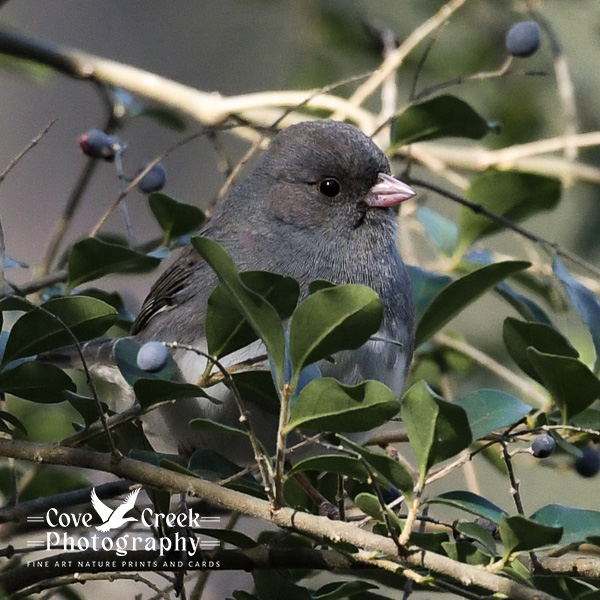
Dark-eyed juncos (Junco hyemalis) are medium-sized sparrows that spend the warmer parts of the year in Canada and in the mountains of the western United States. However, they come pouring into the rest of the country for the winter months. These tiny birds are easy to identify; although, there is a lot of variation in color, often depending on your location in the United States. A very distinctive characteristic of the dark-eyed junco is its pink bill! They also have an easily recognizable contrasting black to white feather pattern; although in some forms, the dark color may range from gray (as in the above image) to a light brown. In flight, you will notice a flash of white from the tail feathers when they flit about.
If you are awaiting the arrival of dark-eyed juncos, keep an eye on the ground. With their long migration south completed, or at least nearing the end, these new arrivals will begin feeding on small grass seeds in your yard and will explore the ground beneath any bird feeders you may have. They are primarily ground feeders, but they will hop up on platform or hanging bird feeders if you offer small seeds like millet or hulled sunflower seeds.
Of course, weather patterns and frost dates differ each year, so the arrival of dark-eyed juncos is certainly not calendar dependent. For example, I've noted the first arrival of dark-eyed juncos as late as mid-November in 2022 and as early as October 11th in 2023. Today is November 1st, 2025 so that splits the difference between 2022 and 2023. Not sure why I didn't record the arrival date in 2024.
If you want to try capturing an image of dark-eyed juncos, whether with an iPhone or camera, you'll find it's fairly easy and their feather pattern lends itself to a beautiful image. When the birds first arrive, they are a bit skittish when you're in their general area. They may go into hiding in nearby shrubs and trees. With a bit of time, they seem to settle in and get used human presence, and that's when they are relatively easy to photograph, even from close range. If you plan on "dark-eyed junco photography" this winter, the positive is that you have plenty of time. The juncos will typically be with us until March or April. I find that they produce a beautiful image on snow covered branches. So, let's hope for at least one pretty snowfall this season. Meanwhile, get your garden prepped for a frost, and then enjoy these delightful winter birds!
If you enjoy birds as much as gardening, feel free to browse my selection of holiday cards and hand-painted wood slice ornaments!